






Millions of bottles of hand sanitizer flood the Indian market every year — and not all of them work. During the COVID-19 pandemic, regulatory bodies including WHO and FSSAI flagged hundreds of substandard products containing insufficient alcohol, water instead of ethanol, or harmful substitutes like methanol. The problem hasn’t gone away.
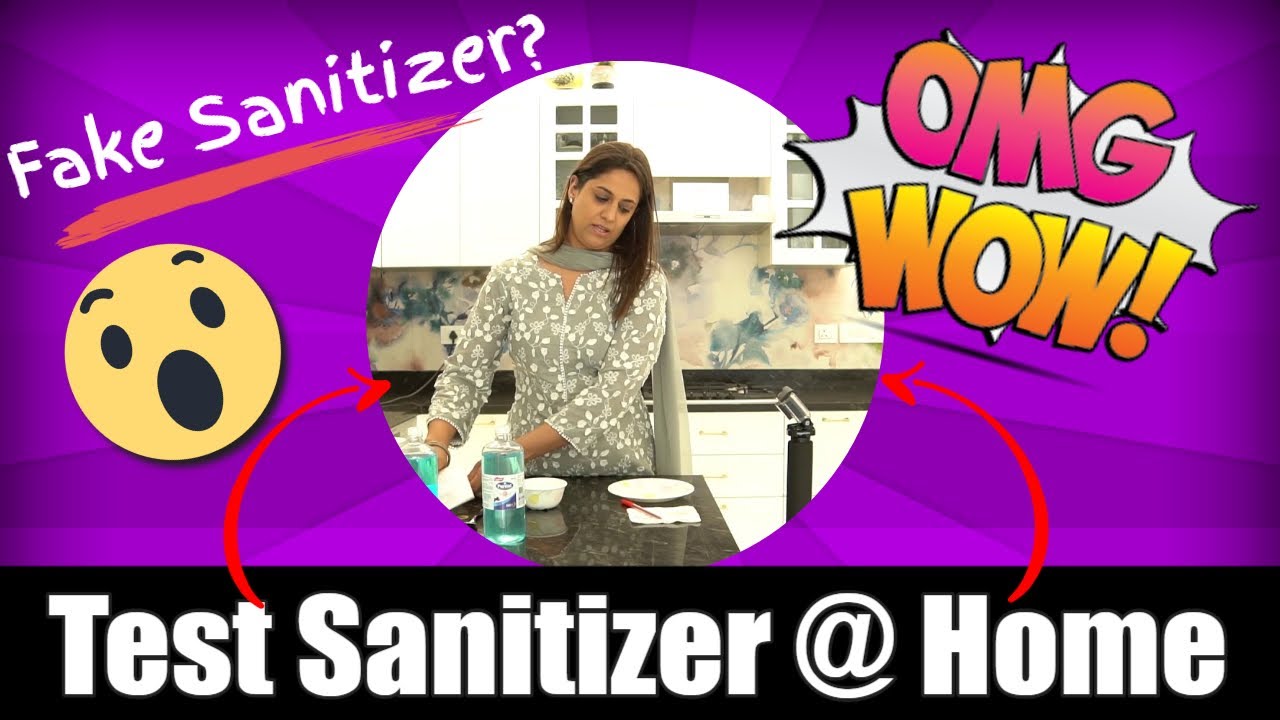
If you’ve ever squeezed out a sanitizer that felt watery, smelled off, or dried too slowly, your instincts were probably right. This guide walks you through three simple tests you can do at home to check whether your hand sanitizer has adequate alcohol content — the single most important factor in its effectiveness.
Important: These home tests screen for obvious quality failures. They cannot replace certified laboratory testing for regulatory compliance, export documentation, or manufacturing quality assurance. For certified testing, contact Auriga Research.
Table of Contents
- What Makes a Hand Sanitizer Effective?
- Test 1: The Evaporation Test
- Test 2: The Paper Ink Test
- Test 3: The Flame Test
- How to Read Your Results
- When Home Tests Are Not Enough
- Hand Sanitizer Standards in India
- Frequently Asked Questions
What Makes a Hand Sanitizer Effective?
The primary active ingredient in any effective hand sanitizer is alcohol — either ethanol (ethyl alcohol) or isopropanol (isopropyl alcohol). The alcohol disrupts the outer membrane of bacteria and viruses, inactivating them within seconds.
For a hand sanitizer to be considered effective:
| Property | Minimum Standard |
|---|---|
| Alcohol content (ethanol) | ≥ 70% v/v (WHO formula: 80%) |
| Alcohol content (isopropanol) | ≥ 70% v/v |
| pH | 5.5 – 8.0 |
| Methanol content | Zero (toxic; banned) |
| Sterility | Not required for hand sanitizers |
The WHO-recommended formulation uses 80% ethanol or 75% isopropanol as the active base. Products with less than 60% alcohol have significantly reduced efficacy against enveloped viruses and gram-positive bacteria. Products below 40% are essentially ineffective.
All three home tests below are proxies for one thing: is there enough alcohol in this product?
Test 1: The Evaporation Test
This is the simplest and most reliable home screening test. Alcohol evaporates much faster than water or gel thickeners — so a sanitizer with adequate alcohol content should disappear quickly from skin.
What You Need
- A watch or phone timer
- Your sanitizer
- Clean, dry hands (wash and thoroughly dry first)
Method
- Wash and completely dry your hands.
- Apply approximately 3 ml of sanitizer (about one full pump or a 50-paise coin-sized dollop) to the back of one hand.
- Rub hands together normally, as you would when actually sanitizing.
- Start your timer and stop rubbing.
- Observe how long the sanitizer remains visibly wet on your skin.
What the Result Means
| Evaporation Time | Interpretation |
|---|---|
| < 15 seconds | Good — high alcohol content, likely ≥ 70% |
| 15 – 30 seconds | Acceptable — moderate alcohol, borderline |
| > 30 seconds | Concern — low alcohol or excessive water/glycerol |
| Doesn’t evaporate / feels sticky | Fail — likely insufficient or no alcohol |
Why this works: Ethanol has a boiling point of 78°C and an evaporation rate roughly 4× faster than water at room temperature. Isopropanol evaporates slightly slower than ethanol but still significantly faster than a water-heavy formulation.
Caveat: Some high-glycerol formulas (WHO formula contains 1.45% glycerol) may feel slightly sticky after the alcohol evaporates. This is normal. What’s not normal is a product that remains wet or greasy for more than 30–40 seconds.
Test 2: The Paper Ink Test
This test exploits the fact that alcohol dissolves ink-based pigments, while water does not smear newsprint the same way. It’s a useful secondary check.
What You Need
- A piece of newspaper (printed text area)
- A pen or marker
- Your sanitizer
- Dropper or your fingertip
Method
- Write a few words on a piece of paper using a ballpoint pen, or use the printed text on a newspaper.
- Drop 3–4 drops of sanitizer directly onto the written text.
- Wait 10 seconds, then gently smear the wet area with your fingertip.
- Observe what happens to the ink.
Alternatively: Drop sanitizer onto a newspaper’s printed text area and compare the smearing to a drop of plain water on another part of the same page.
What the Result Means
| Observation | Interpretation |
|---|---|
| Ink smears and spreads clearly | Likely good alcohol content — ethanol dissolves ink |
| Ink barely smears; area dries clean | Possible low alcohol |
| No smearing; behaves like water | Very low or no alcohol |
Why this works: Ethanol and isopropanol are polar organic solvents that dissolve the pigment binders in ballpoint ink and newsprint. Water alone is a poorer solvent for these inks and produces a different smear pattern.
Note: This test is qualitative and approximate. Results can vary with different pen brands and paper types. Use it alongside the evaporation test, not instead of it.
Test 3: The Flame Test
This test directly checks whether the product contains flammable alcohol. Ethanol and isopropanol are flammable above ~40% concentration; water will not burn.
What You Need
- A ceramic or metal dish (never glass or plastic)
- A matchstick or lighter
- A small dropper or spoon
- Your sanitizer
Safety Rules Before You Start
⚠️ Do this outdoors or near an open window. Keep a glass of water nearby. Never perform this test near other flammable materials, fabrics, or near children. Use a very small quantity — 2–3 ml at most.
Method
- Place a small ceramic dish on a stable, non-flammable surface outdoors or on a concrete/tile surface.
- Add 2 ml of sanitizer (about half a pump) to the dish.
- From a safe distance, use a long match or lighter to bring flame near — not into — the sanitizer.
- Observe whether it ignites and how long it burns.
What the Result Means
| Observation | Interpretation |
|---|---|
| Ignites easily, burns with clear/blue flame for 5+ seconds | Good alcohol content (≥ 70%) |
| Ignites briefly, flame sputters and dies quickly | Moderate alcohol, borderline effective |
| Does not ignite at all | Very low or no alcohol — likely ineffective |
| Burns with yellow or sooty flame | Possible contamination or non-ethanol solvent |
Why this works: Ethanol has a flash point of 13°C (it ignites readily at room temperature). A 70%+ ethanol product will ignite cleanly. Products diluted with water or containing insufficient alcohol will not sustain combustion. The test also screens for methanol — methanol burns with a nearly invisible blue flame — though differentiating it visually from ethanol is not reliable without GC analysis.
Methanol warning: If a sanitizer smells unusually sharp, acrid, or chemical (rather than the characteristic clean ethanol or mild isopropanol smell), do not use it. Methanol is toxic — it causes blindness and death through skin absorption. Contaminated products found in the market during 2020–21 led to deaths. Only certified laboratory testing can confirm methanol content.
How to Read Your Results
Use all three tests together for the most reliable screening:
| Test 1 (Evaporation) | Test 2 (Ink) | Test 3 (Flame) | Overall Assessment |
|---|---|---|---|
| < 15 sec | Smears clearly | Ignites and burns | ✅ Likely adequate |
| < 15 sec | Smears | Does not ignite | ⚠️ Possibly gel formulation — retest |
| 15–30 sec | Slight smear | Barely ignites | ⚠️ Borderline — consider lab testing |
| > 30 sec | No smear | Does not ignite | ❌ Likely inadequate — avoid using |
A sanitizer that fails two or more of these tests should not be used for infection control. Discard it or send it for certified laboratory analysis before relying on it.
When Home Tests Are Not Enough
Home tests tell you whether there is roughly enough alcohol. They cannot tell you:
- Exact alcohol percentage — you need GC (Gas Chromatography) analysis
- Whether methanol is present — requires GC-MS testing; methanol is dangerous
- pH compliance — affects skin compatibility and formulation stability
- Microbial contamination — water-contaminated batches can harbour pathogens
- Heavy metal content — some low-quality formulations contain lead or arsenic as impurities
- Regulatory compliance — required for export, hospital use, tenders, or regulatory filings
Auriga Research provides certified hand sanitizer testing with NABL-accredited results accepted by CDSCO, FSSAI, and international buyers. Our scope includes:
- Ethanol / IPA content by GC (USP, IP methods)
- Methanol screening by GC-MS
- Microbial testing (TAMC, TYMC, specific pathogens)
- pH and viscosity
- Heavy metals by ICP-MS
- Preservative identification
- WHO formula compliance check
Request a sanitizer testing quote →
Hand Sanitizer Standards in India
Hand sanitizers in India are regulated under the Drugs and Cosmetics Act, 1940 — classified as OTC drugs when they make antimicrobial claims, or as cosmetics when positioned purely for cleansing.
Key applicable standards:
| Regulatory Body | Applicable Standard |
|---|---|
| CDSCO | Drugs and Cosmetics Act, Schedule M-III (OTC) |
| WHO | Technical Report Series No. 1004 — Annex 2 (WHO formula) |
| BIS | IS 13498 — Alcohol-based hand rubs |
| FSSAI | Not applicable (sanitizers are not food products) |
WHO-recommended formulas published in 2010 and updated in 2020 specify two versions:
- Formulation I: 80% v/v ethanol, 1.45% glycerol, 0.125% hydrogen peroxide
- Formulation II: 75% v/v isopropanol, 1.45% glycerol, 0.125% hydrogen peroxide
Products claiming WHO-formula compliance should meet these exact specifications. Our lab tests verify conformance to both formulations.
Frequently Asked Questions
What alcohol percentage should a hand sanitizer have?
A minimum of 60% alcohol is required for basic effectiveness. WHO recommends 70–80% ethanol or 75% isopropanol for maximum efficacy against bacteria and viruses including influenza and coronaviruses. Products below 60% are not considered effective for hand hygiene.
Is ethanol or isopropanol better in a hand sanitizer?
Both are effective at ≥ 70% concentration. Ethanol (ethyl alcohol) is preferred where the product may be inadvertently ingested (e.g., around children). Isopropanol is slightly more effective against some bacteria and fungi but has a stronger chemical smell. Neither should contain methanol.
Can I tell if a sanitizer contains methanol at home?
Not reliably. Methanol smells similar to ethanol but has a slightly sharper, more acrid odour. The flame test shows a nearly invisible blue flame for methanol vs. a visible blue/yellow flame for ethanol — but this is not a reliable differentiation method. Only GC-MS laboratory testing can confirm the presence and quantity of methanol. If you suspect methanol contamination, stop using the product and report it to CDSCO.
Why do some sanitizers feel sticky after application?
Stickiness indicates either (a) the alcohol has evaporated, leaving behind glycerol or carbomer gel base — this is normal and means the product is working, or (b) the product contains excessive humectant and low alcohol — meaning it wasn’t very alcoholic to begin with. Use the evaporation test to distinguish between the two scenarios.
Does hand sanitizer expire?
Yes. The typical shelf life of an alcohol-based sanitizer is 2–3 years from manufacture date. After expiry, the alcohol evaporates through the cap over time, reducing concentration. An expired sanitizer may fail the evaporation and flame tests even if it was originally adequate. Always check the expiry date.
My sanitizer passes the home tests — is it definitely safe?
The home tests indicate adequate alcohol content — the primary efficacy factor. They do not confirm the absence of methanol, microbial contamination, or toxic impurities. For products used in healthcare, food manufacturing, pharmaceutical facilities, or for export, certified NABL-accredited testing is essential. Home tests are for consumer screening only.
Conclusion
The three home tests — evaporation, paper ink, and flame — give you a practical way to screen hand sanitizers for obvious quality failures without any equipment. If your sanitizer fails two or more of these tests, it likely has insufficient alcohol content and should not be relied on for infection control.
For manufacturers, exporters, hospitals, or anyone requiring certified results, Auriga Research’s hand sanitizer testing panel delivers NABL-accredited reports accepted by CDSCO and international buyers — with results in as fast as 5–7 working days.
Auriga Research is a NABL-accredited testing laboratory (ISO/IEC 17025:2017) with CDSCO approval, WHO Prequalification, and FSSAI notification. All sanitizer testing is performed using validated pharmacopoeial methods.
Auriga Research Team
Auriga Research is India's largest NABL-accredited testing network with laboratories in Delhi, Manesar, Bangalore, Baddi, and Bahadurgarh. Our team of scientists delivers accurate, regulatory-accepted results across pharmaceutical, food, water, environmental, and specialised testing.
About Auriga Research →